
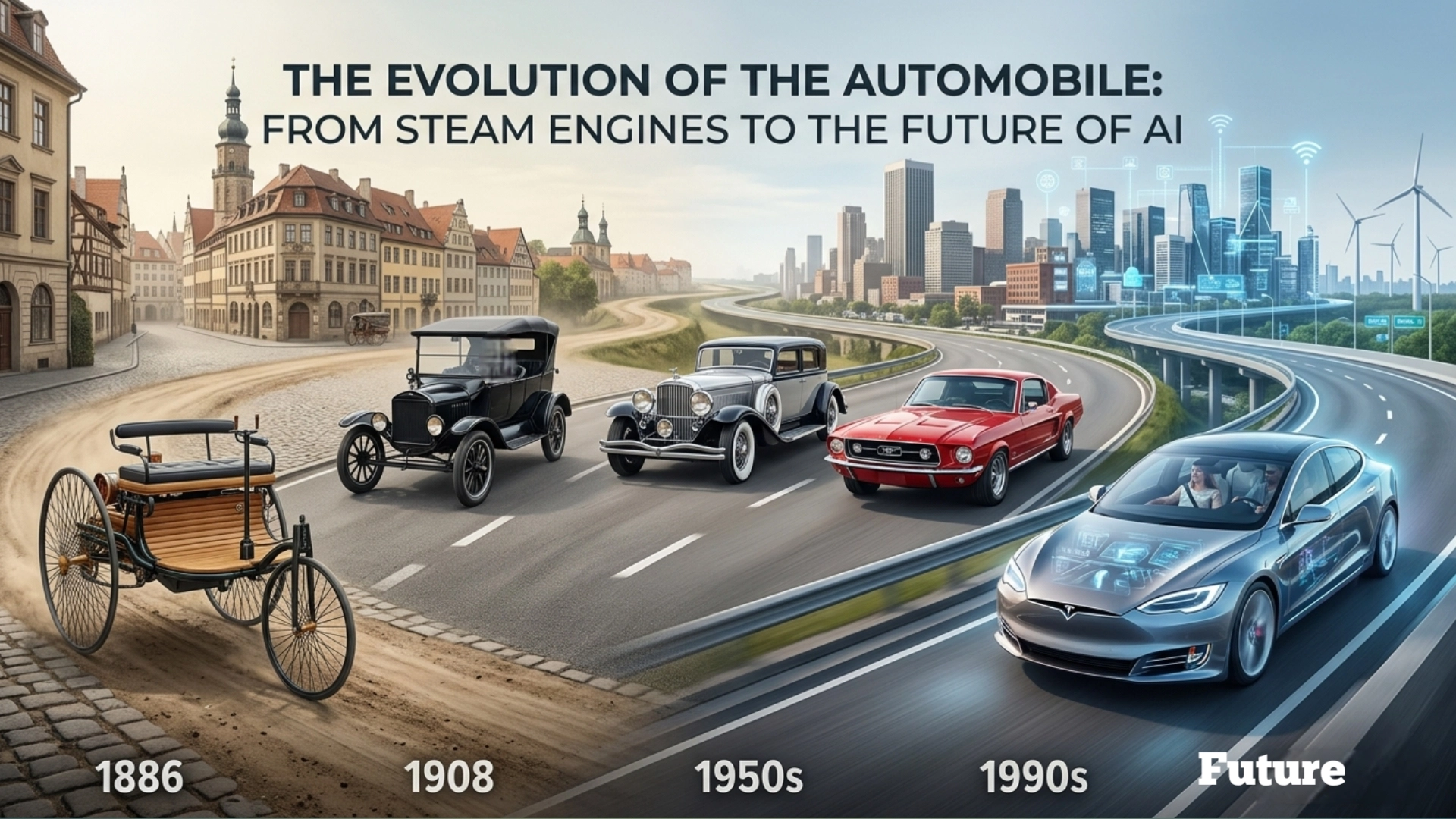
The story of the car is more than just a timeline of nuts, bolts, and engines. It is the story of human freedom. Imagine a world where your entire life was restricted to how far a horse could walk in a day. Today, we step into a cabin, press a button, and traverse continents.
But how did we get here? From the first puff of steam to the silent hum of electric motors, the history of the automobile is a wild ride of genius, failure, and world-changing innovation. Let’s dive into the grease and glory of how the world started moving.
1. The Dawn of Motion: Before the Gasoline Dream
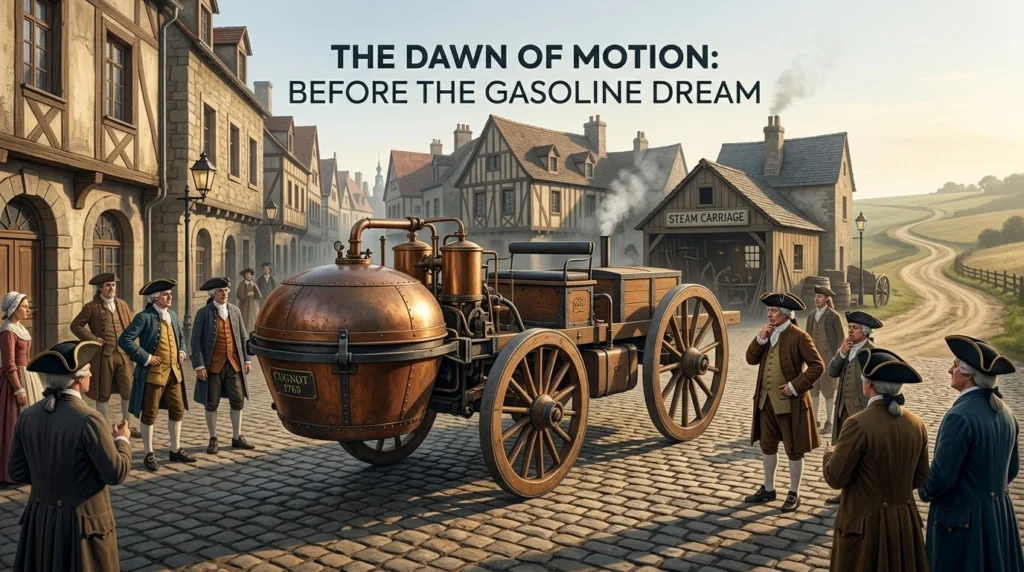
Long before gas stations existed, inventors were obsessed with “self-propelled” vehicles. The history of the automobile actually begins in the late 18th century with steam.
In 1769, Nicolas-Joseph Cugnot created a steam-powered tricycle for the French army. It was heavy, slow (moving at a walking pace), and famously crashed into a wall—making it the world’s first motor vehicle accident. Steam engines were powerful but impractical for personal use; they required massive boilers and took forever to start.
What do you think? Imagine having to start a fire in your driveway for 45 minutes just to drive to the grocery store. Would you have traded your horse for that? Probably not yet!
2. 1886: The Birth of the Modern Car
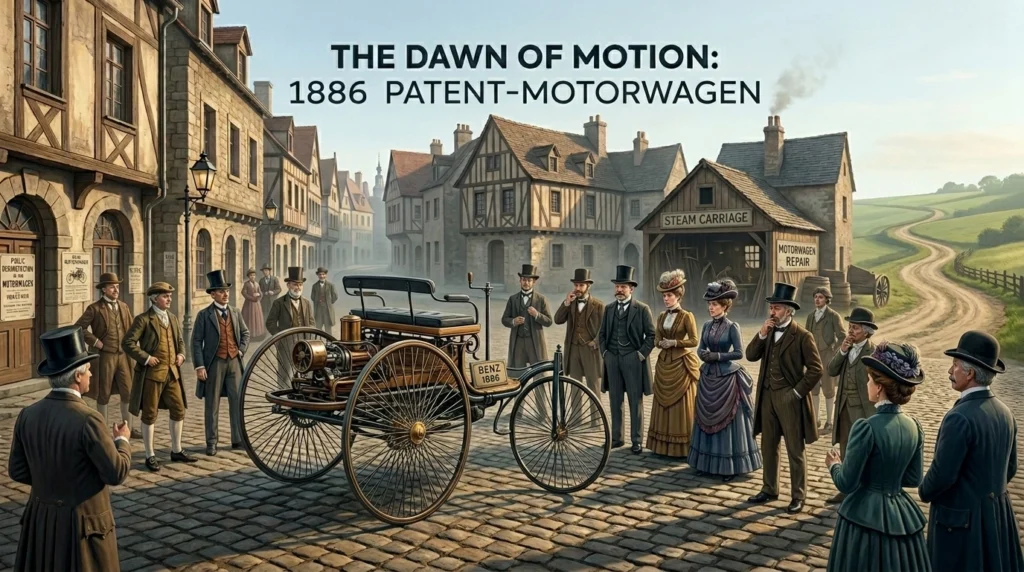
The real game-changer arrived when Karl Benz patented the Motorwagen in 1886. This is widely considered the official starting point of the history of the automobile because it was the first vehicle designed to run on an internal combustion engine (ICE).
While Karl was the engineer, his wife, Bertha Benz, was the marketing genius. In 1888, without telling her husband, she took the “Model 3” on a 106-kilometer journey to visit her mother. She fixed brakes with leather strips and cleared fuel lines with her hatpin. She proved to the world that the car wasn’t just a toy for scientists—it was a tool for everyone.
3. Henry Ford and the Power of the People
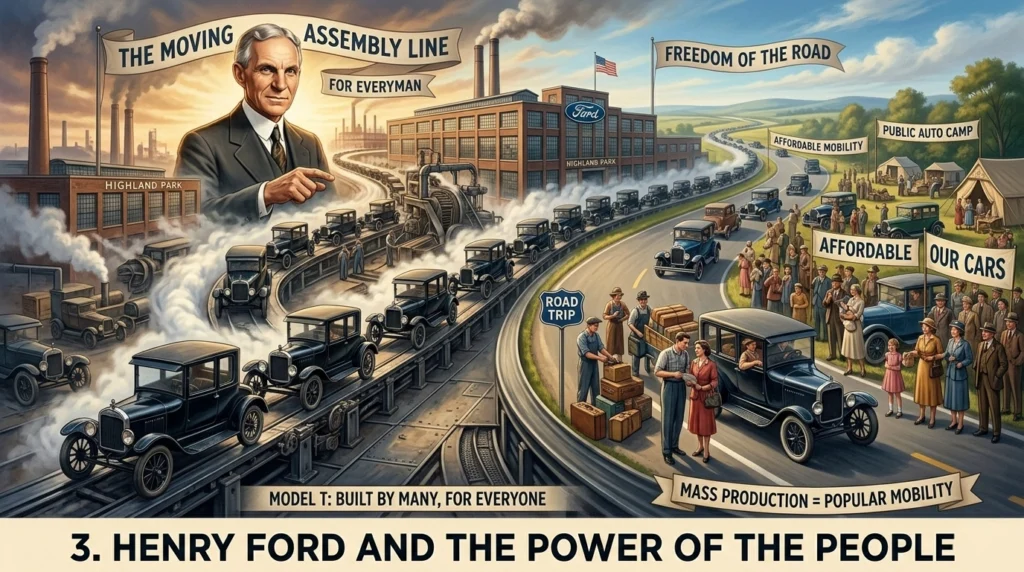
By the early 1900s, cars were luxury items for the ultra-rich. They were hand-built and incredibly expensive. Then came Henry Ford.
In 1908, the Model T changed everything. By introducing the moving assembly line, Ford slashed the time it took to build a car from 12 hours to 90 minutes. This dropped the price so significantly that the average worker could finally afford one.
The history of the automobile shifted here from a “hobby” to an “industry.” Cities began to change; roads were paved, and the “road trip” was born.
- Fun Fact: The Model T was so popular that by 1918, half of all cars in the US were Fords.
- The Famous Quote: “You can have any color you want, as long as it’s black.”
4. The Golden Age of Design and Speed (1920s – 1950s)
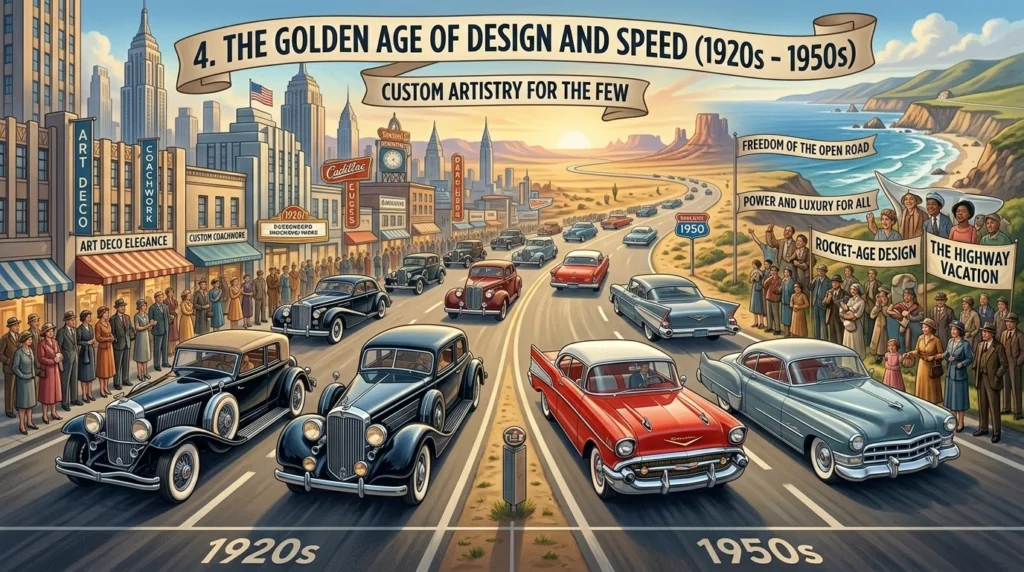
After WWI, cars became status symbols and works of art. This era saw the rise of legendary names like Rolls-Royce, Cadillac, and Duesenberg.
Following WWII, the “Chrome Era” took over. Cars became longer, lower, and wider, sporting massive tail fins inspired by the Space Age. This period in the history of the automobile emphasized style and power. Muscle cars like the Ford Mustang and the Chevy Camaro eventually emerged, turning the commute into an adrenaline-pumping experience.
5. Challenges, Safety, and the Oil Crisis
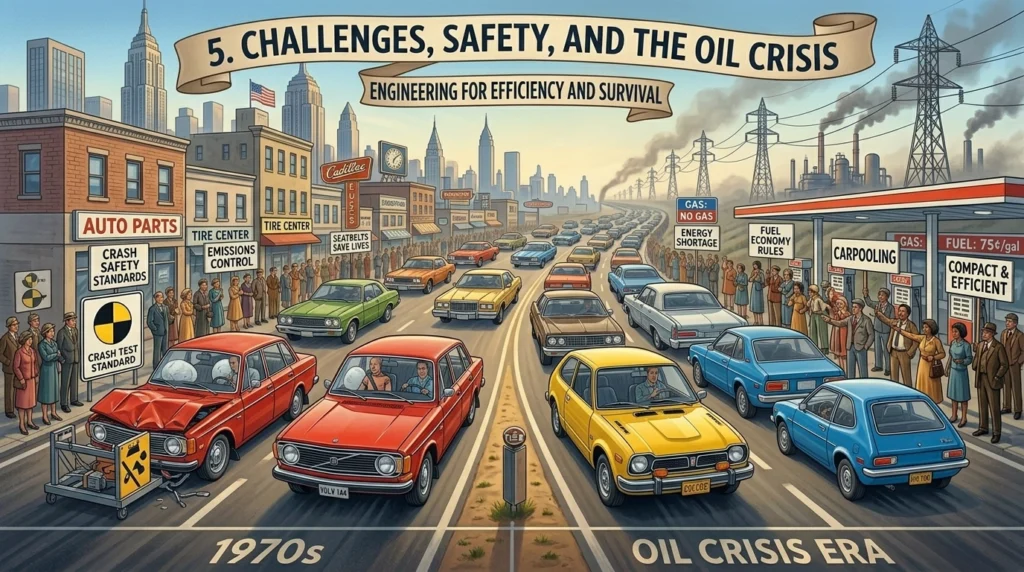
The 1970s brought a reality check. The oil crisis meant that “gas-guzzlers” were no longer sustainable. Drivers wanted efficiency. At the same time, safety advocates like Ralph Nader pushed for seatbelts, airbags, and better crash standards.
This forced engineers to innovate. We saw the rise of fuel injection, downsizing of engines, and the dominance of Japanese manufacturers like Toyota and Honda, who mastered the art of the reliable, fuel-efficient daily driver.
6. The Digital Revolution: Computers on Wheels
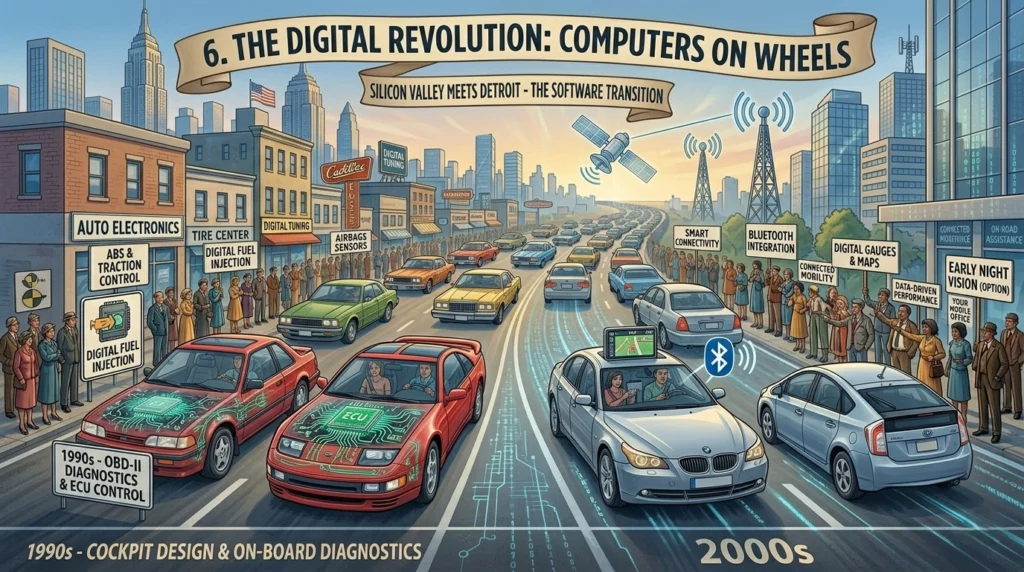
By the 1990s and early 2000s, the history of the automobile entered the silicon age. Electronic Control Units (ECUs) began managing everything from engine timing to braking.
We moved away from purely mechanical machines to “computers on wheels.” Bluetooth, GPS navigation, and hybrid technology (pioneered by the Toyota Prius) started bridging the gap between the old world of fossil fuels and the new world of sustainable tech.
7. The Future: Electric and Autonomous
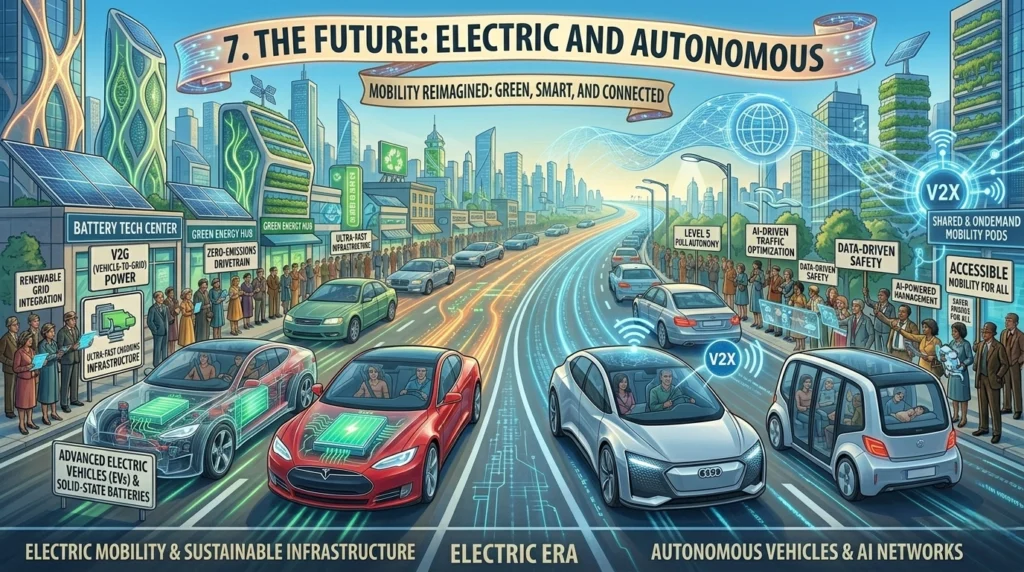
As we stand in the present day, we are witnessing the biggest shift since 1886: The Electric Revolution. Companies like Tesla have proven that electric vehicles (EVs) can be fast, sexy, and long-range. We are also moving toward “Self-Driving” or autonomous technology. The history of the automobile is no longer just about driving; it’s about being transported.
- Sustainability: Reducing carbon footprints.
- Connectivity: Cars that talk to each other to prevent accidents.
- AI Integration: Your car knowing your destination before you even sit down.
Conclusion: Where Do We Go From Here?
From Cugnot’s crashing steam tractor to AI-powered electric supercars, the history of the automobile shows that humans will never stop trying to go faster, further, and safer.
The car transformed our world, built our cities, and gave us a sense of autonomy that previous generations could only dream of. As we move toward a greener future, the “soul” of the car—that feeling of hitting the open road—remains exactly the same.
Join the Conversation! What was your very first car? Do you miss the roar of a gasoline engine, or are you ready to go fully electric? Let us know in the comments below—we’d love to hear your “road stories!”